

Laminate Flooring Buying Guide

Practical advice about buying laminate flooring for your home or office.
No matter how well we care for flooring, it never lasts forever. Whether you are looking for low-maintenance flooring, stylish designs or something that fits your budget, laminate flooring might fit the bill.
This laminate flooring buying guide offers advice about what to look for when buying a laminate floor.
Navigate this guide
What Is Laminate Flooring?
Laminate flooring was invented in the late 1970s and is a multi-layer synthetic flooring now widely used in residential homes and commercial buildings. A lamination process fuses the different layers, and the resulting product mimics natural materials like wood or stone.
Laminate floor products generally have a high-performance, moisture-resistant backing layer, forming a stable flooring base. Laminate also has a high-density core, commonly made of a high-density fibreboard (HDF) designed to withstand dents and other wear and tear.
The top layer typically features a high-resolution image (of wood, tile or stone) which can give your floors a realistic and appealing appearance. Manufacturers then coat this with a protective layer of clear resin for extra durability.
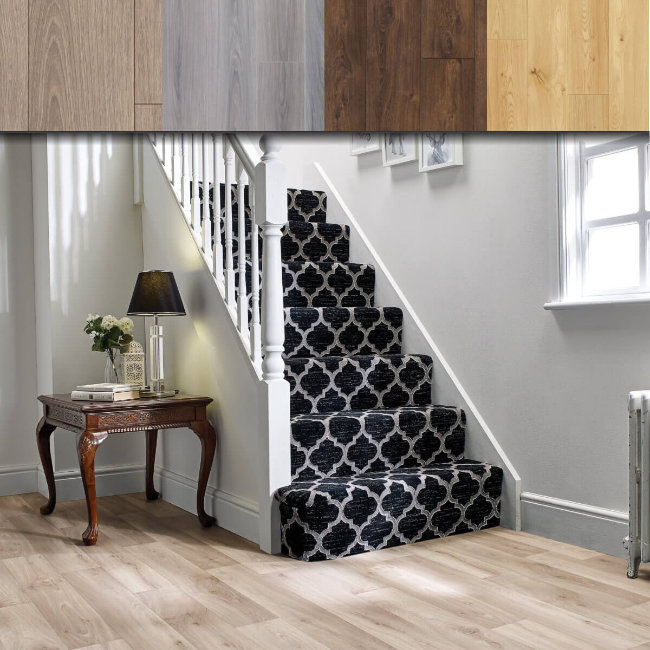
Types of Laminate Flooring
There are many types of laminate flooring, depending on how you choose to classify them. One way of defining laminate flooring is by the kind of natural material it mimics. The most common of these are as follows:
Laminates that mimic natural materials
Laminate flooring that resembles ceramic tiles is available in either plank form of different lengths or as individual tiles.
Laminate flooring that mimics wood
If you have a higher budget or want real wood, engineered wood flooring may be a good fit. It consists of thin layers of solid wood and, similar to other laminate flooring options, has an acrylic finish that enhances its durability.
The other option is laminate, produced with (less expensive) synthetic materials. You can find laminate flooring that mimics just about any wood. Oak, walnut, maple, you name it! There’s plenty of choice when it comes to shades, too. For example, within oak, there are dozens of shades.
Laminate floors that mimic ceramic tiles
Laminate flooring that resembles ceramic tiles is available in either plank form of different lengths or as individual tiles.
As with the products that look like wood, laminate that can imitate many tile styles are available on the market, these tiles can be a great addition to any space.
Laminate flooring that mimics stone
Stone-effect laminate flooring can certainly portray the beauty of natural stone. This flooring comes in many stone-like colours with unique textures and subtle indentations that result in a natural-looking floor.
For the perfect finishing touch for your contemporary-style decor, stone effect laminate flooring is ideal. These sophisticated planks offer the look and feel of real stone flooring without the expensive price tag. And the lifelike grouting further enhances their authenticity.
Types of Laminate Flooring Installation
Manufacturers of laminate flooring construct it with different installation methods in mind, as follows:
Pre–Glued Laminate Flooring – These come with the glue already applied. The installation process may vary from product to product – but is usually straightforward.
Glued Laminate Flooring – The person installing the laminate flooring has to apply the glue, which is more time-consuming.
Glueless Laminate Flooring – This type of laminate flooring installation uses tiles or planks that do not require glue. The planks are locked into place, usually using a double-click method.
Underlay – We advise using underlay for laminate flooring because it helps evenly distribute the flooring across your subfloor. It also gives it stability and assists with noise reduction.
There is an assortment of laminate flooring underlays. However, some planks come with underlay pre-attached. Laminate flooring with pre-attached padding can result in a thinner floor layer than that fitted with a separate underlay. A thinner floor layer can make it less resilient and soundproof.
Laminate Flooring Surface Types
When it comes to choosing the right type of surface for your laminate flooring, there are several options to consider. Each type of surface has its own unique advantages and disadvantages, so it’s important to weigh your options carefully before making a decision.
Smooth – Laminate flooring with a smooth surface usually resembles floor products like ceramic and marble. However, smooth surfaces are more prone to showing scratches and scuffs, so they may not be the best choice for households with pets or young children. Smooth laminate flooring is the easiest to clean but sometimes looks less realistic than those with a more texture finish.
Textured – Embossed laminate flooring features a textured surface that mimics the look of natural wood or stone. They can help to hide scratches and other imperfections, making them a good choice for high-traffic areas. While textured or embossed laminate flooring looks extremely lifelike, the grooves and ridges tend to make it harder to clean.
Distressed – If you’re aiming for an antique look, distressed laminate flooring could be a great fit for your project. If you’re after something a little more unique or exotic, hand-scraped or distressed laminate flooring can add a rustic flair to your space.
No matter which type of surface you choose, be sure to consider all the other factors included in this guide to buying laminate flooring.
Laminate Flooring Patterns & Designs
Once one of the less attractive residential flooring options with more limited design choices, today’s laminate looks better than ever, with a wide range of designs.
Traditional Patterns – Manufacturers originally designed laminate flooring to replicate the aesthetic appeal of real wooden floors. As such, the dimensions and layout of traditional laminate flooring patterns emulate traditional floorboards and other wood flooring patterns.
Thin Planks – If you’re considering using thin planks of laminate flooring for your home, it’s important to note that while it can create a modern and sleek appearance, it may not resemble authentic wooden floors as much.
Wide Planks – If you opt for wider planks in a pattern, the laminate flooring will exude an air of sturdiness and evoke the charm of older architectural styles. This effect can be particularly pronounced, lending a touch of timeless elegance to any space.
Herringbone – Incorporating a herringbone pattern into the design of a room can provide an added layer of depth and individuality, serving as a standout characteristic that distinguishes it from other spaces.
When you are considering which type of laminate flooring is best for a room in your home or office, there are several other factors to consider, as follows:
Considerations if buying laminate
Laminate Flooring Brands
As recognised partners and retailers of top flooring brands, such as Quick-Step, we understand the importance of choosing high-quality laminate flooring. If you are buying laminate flooring, it is worth exploring the product features of different brands.
While most laminate floors have similar qualities, some brands offer laminate products with unique characteristics such as ease of installation, increased durability etc. With the best laminate flooring, every grain and every knot looks lifelike.
Laminate Flooring Colours
High-quality laminate is an excellent option for replicating the look of natural floor materials at a much more manageable cost. And thanks to modern printing technology, there are plenty of colours, styles and designs to choose from.
Laminate flooring is available in many shades of brown and just about every grey shade between white and black. In addition, you can buy blue laminate, red laminate and most, if not all, other colours.
Among the most popular types of laminate flooring is the standard, smooth-surface laminate flooring that comes in a wide range of colours and textures. You certainly won’t struggle to find a laminate floor colour to fit with the decor in your room.
Room Suitability
It is easy to find kitchen and bathroom laminate flooring, bedroom laminate flooring, laminate flooring for your stairs, and laminate flooring suitable for just about every space in your home. However, we recommend you read the manufacturer’s guidelines or speak with a flooring specialist to determine the most suitable type for your room.
There are waterproof laminate floorboards perfect for the bathroom, but be aware that most are water-resistant rather than fully waterproof.
You can get laminate flooring suitable for use with underfloor heating systems, but using the correct underlay is important.
Laminate Thickness & Width
We are often asked – What is a good thickness for laminate flooring? There is a wide variety of laminate flooring options in terms of thickness and width. Standard thicknesses for laminate flooring boards are 6mm, 7mm, 8mm, 10mm and 12mm. There are different widths to choose from, allowing you to select the one that suits your room’s size, shape, and interior design.
Laminate Flooring Rating
The Abrasion Criteria Rating – also called the ‘AC’ rating, is the internationally acknowledged classification of the durability of laminate flooring and measure wear resistance. These ratings span five levels ranging from AC1 (moderate residential use) to AC6 (intensive commercial use).
The rating for flooring is crucial as it provides a fairly precise indication of its ability to withstand stains, abrasions, heat, scratches, and other types of impact.
Five advantages of laminate flooring
Laminate flooring has several desirable qualities.
Durability
Laminate flooring is highly durable and scratch-resistant, making it ideal for high-traffic areas in homes and commercial spaces. Because most laminate floors are wear and scratch resistant, they can usually withstand the activities of pets and children
Easy Maintainance
Maintaining laminate flooring is a breeze thanks to its scratch-resistant, chip-proof, and durable characteristics. Regular sweeping and mopping is all it takes to ensure that it stays in excellent shape for a lengthy period. You should always check the manufacturer’s guidelines regarding caring for your floor.
Versatility
There is a laminate product suitable for most rooms and spaces. And whether you’re looking for a rustic farmhouse look or a sleek contemporary style, laminate flooring will offer a wide array of options to turn your dreams into a reality.
Stain Resistant
The protective layer of laminate makes it more stain resistant, meaning it won’t usually hold everyday marks. You can wipe away small spillages without leaving a stain, and most manufacturers supply or recommend cleaning products for more stubborn marks.
Water Resistant
Moisture-resistant properties make laminate floors suitable for installation in kitchens, bathrooms and conservatories where spillages and humidity fluctuations often occur. However, do your homework before choosing laminate flooring for your bathroom.
Laminate Flooring Buying Guide Summary
When selecting laminate flooring, it’s important to consider the subfloor type, the foot traffic your new floor will receive, your desired style, and your approximate budget.
By considering the specific installation method of the floor you choose, you can better determine which type of laminate flooring is best for your needs and preferences.
Each type of laminate flooring may have unique features, such as ease of installation, durability and water resistance. Give some thought to the thickness of the laminate, and remember to check out the Abrasion Criteria Rating along with the manufacturer’s guidelines.
Overall, laminate flooring is a versatile, cost-effective option that benefits homeowners and property managers alike. Ultimately, the type of laminate flooring you choose depends on your preferred style, the size and layout of your room, and the amount of traffic your flooring will likely endure.
If there’s anything in this laminate flooring buying guide you want to discuss in more depth, don’t hesitate to contact a team member. We’ll be happy to help you choose, evaluate, purchase and install laminate flooring.
Carpet and Flooring Buying Guides
Already read this Laminate Flooring Buying Guide? Check out these other buying guides.
- Carpet Buying Guide
- Laminate Flooring Buying Guide
- Rug Buying Guide
- Vinyl Flooring Buying Guide
- Luxury Vinyl Tiles Buying Guide
Carpet Measuring Guides
In these guides, we walk you through the basics of measuring the rooms and spaces in your home.

